
Home / Wood science
The process
Wood science
The process, phase by phase, and what it means for the wood you buy.
The method
Wood modified with heat, to a published standard.
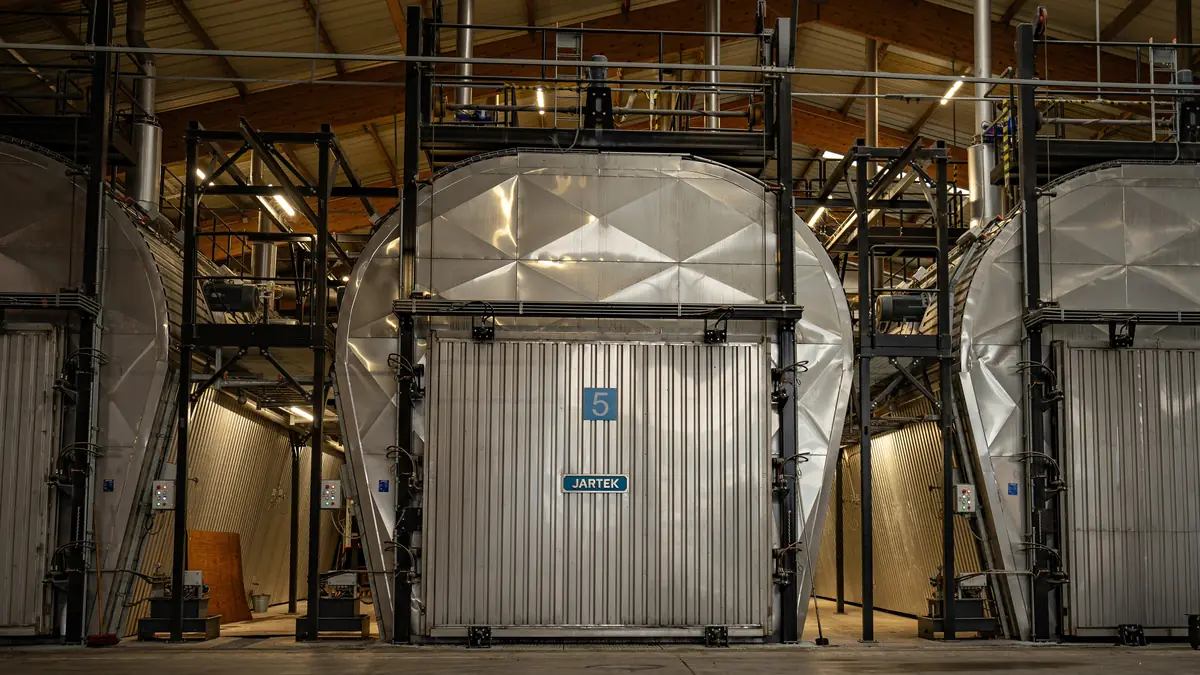
The wood is modified with heat in a kiln, over a set time and to a set temperature. The industrial method was developed in Finland in the 1990s.
The International ThermoWood Association sets the classes, temperatures and quality control for its members. ThermoCraft™ partners LDCwood in Belgium and HJT-Holz and SWM-Wood in Finland are members.
- 2000
- The International ThermoWood Association is founded in Finland.
- 18
- Permanent members in eight countries, October 2026.
Inside the kiln: three phases, start to finish


Before the kiln
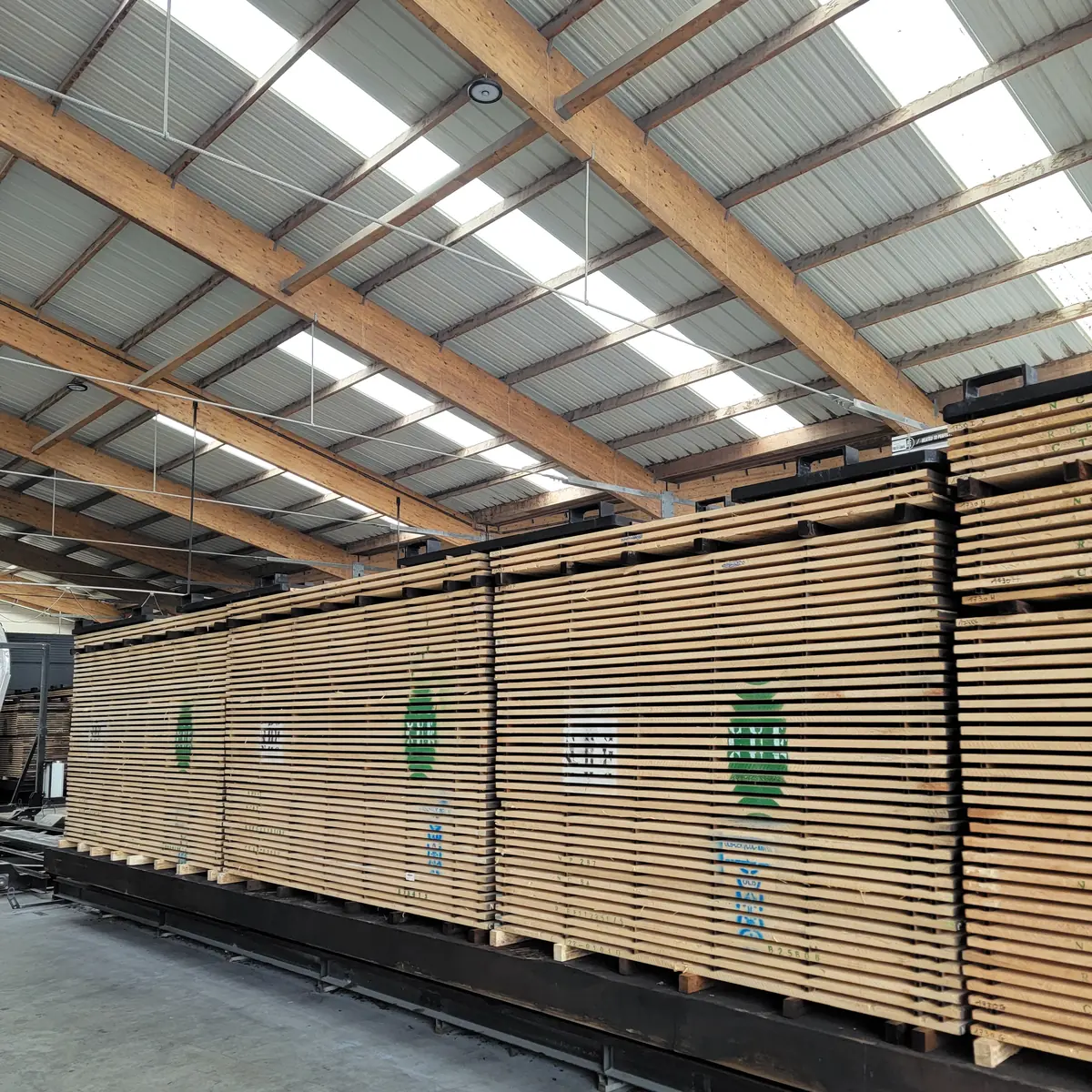
Into the kiln
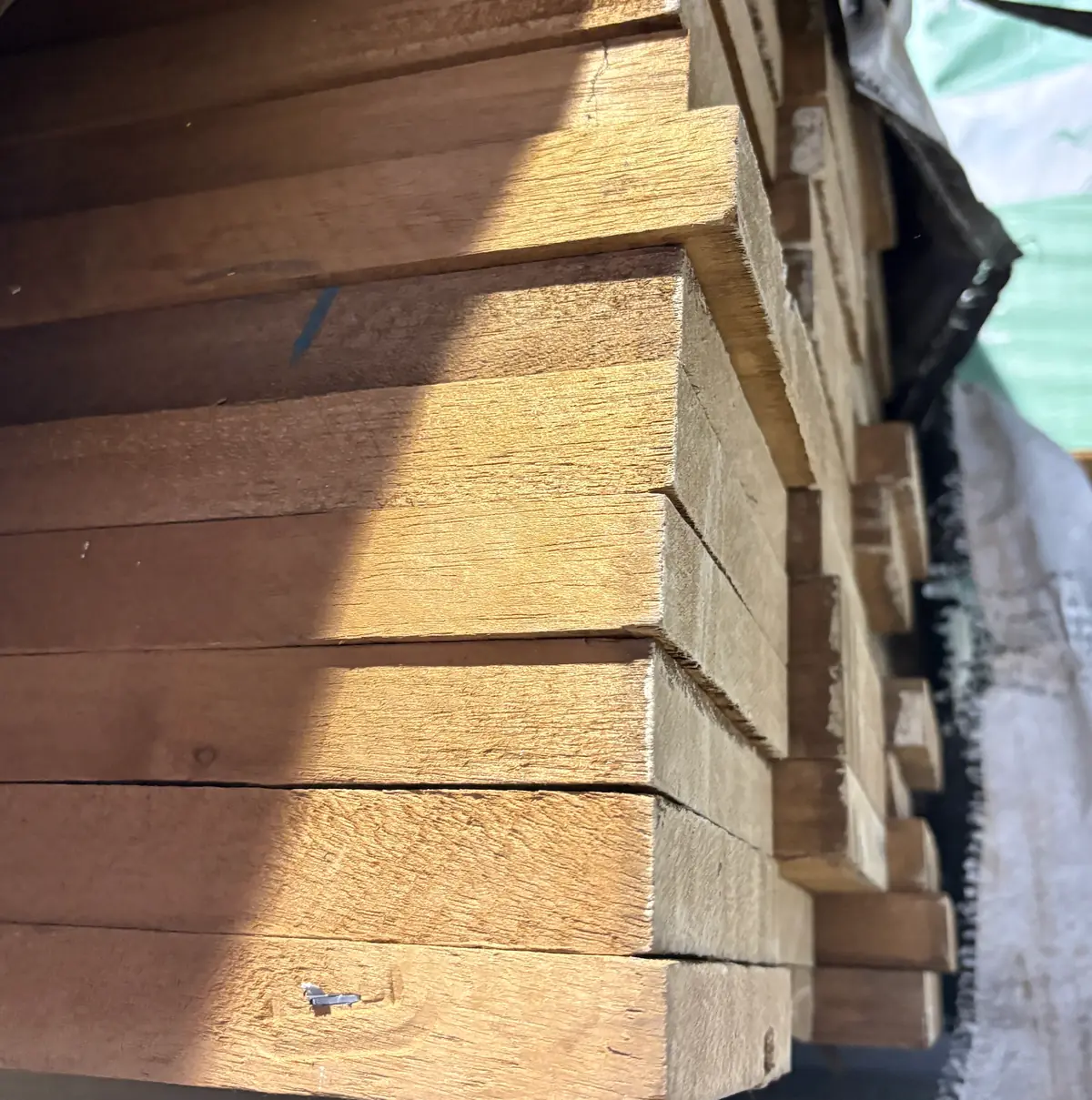
Sawn boards are stacked in layers with spacers between them, so the heat reaches every face, and the loaded carts are rolled into the kiln.
Phase 1
Drying
The kiln heats quickly to 100 °C, then rises step by step toward the modification temperature. The wood dries as it goes.
Phase 2
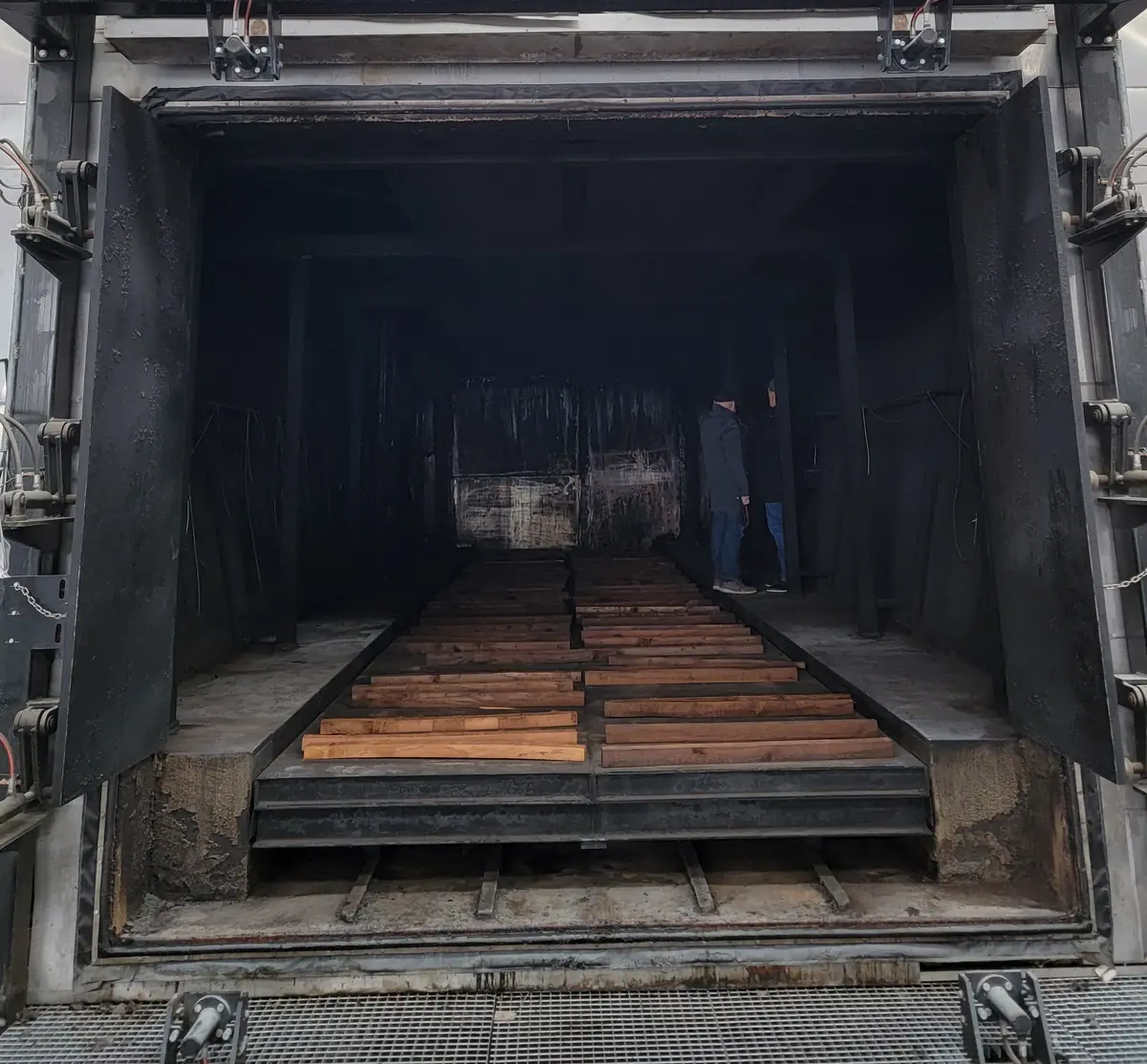
Modification
The kiln holds a steady temperature and the wood is modified. For Nordic softwood in the Thermo-D class, that is 212 °C. Heat and steam change the wood for good, with no chemicals used, so it comes out more durable with a rich, even tone.
Phase 3
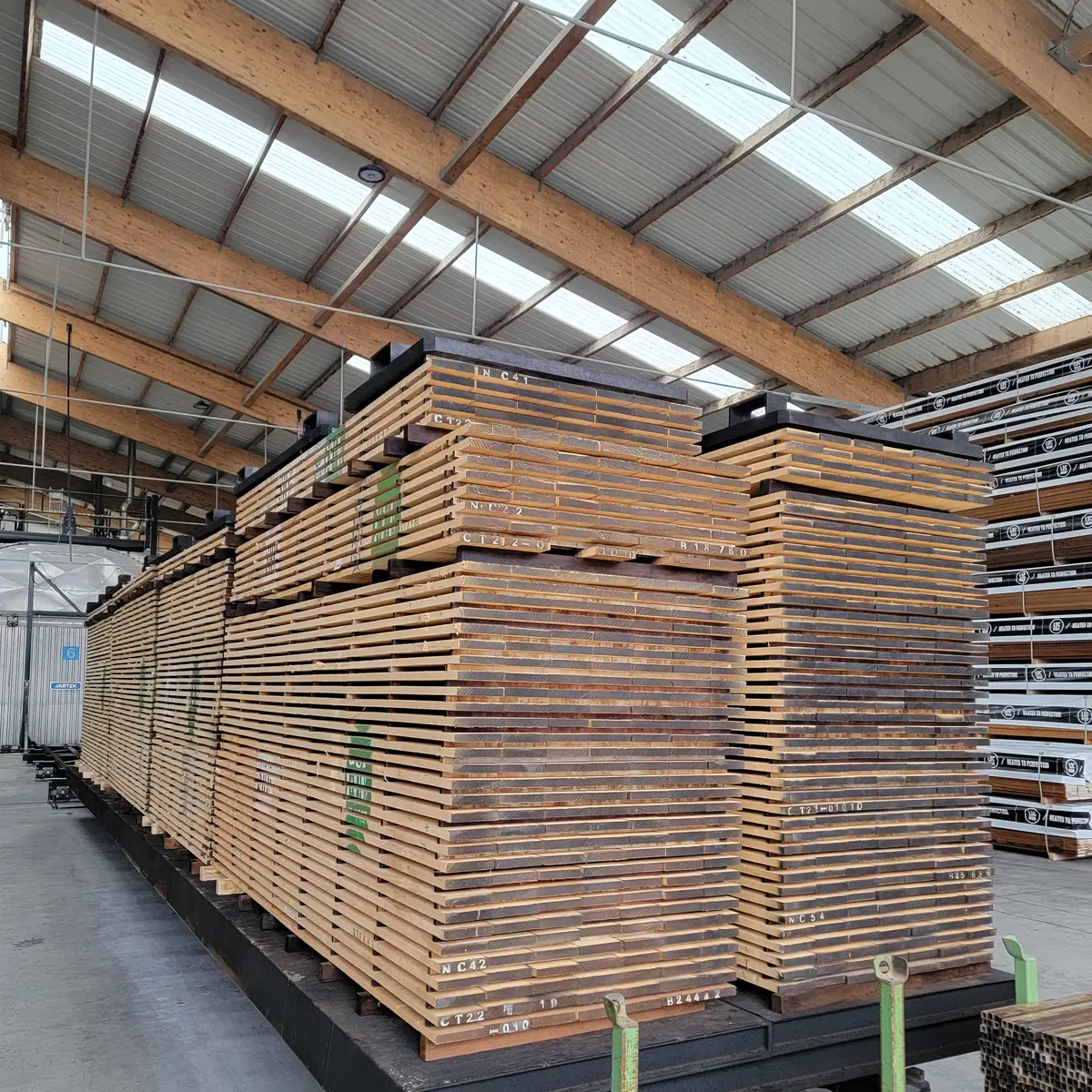
Cooling and conditioning
The kiln is cooled with a water spray. Once it is cool enough, moisture is brought back into the wood so the boards are ready for machining.
After the kiln
Milled to our grade specs
The modified boards are milled into profiles: Fineline T&G, Bevel, Ribbed, S4S and Decking. Custom profiles on request. Talk to our sales team. ThermoCraft boards and profiles are milled to our grade specs.
- Kiln temperature
- 212°C
- 1Drying
- 2Modification
- 3Cooling and conditioning
Schematic for Nordic softwood, class Thermo-D, after the producers' association handbook. Times and temperatures vary by species, class and board size.
Before and after


Classes and temperatures
One process, set by species and class.
The association defines two standard classes, Thermo-S and Thermo-D, and sets the modification temperature for each by wood type. Each kiln schedule is then tuned to the species and the board size.
| Wood | Thermo-S | Thermo-D |
|---|---|---|
| Nordic softwoods: Nordic Pine, Nordic Spruce | 190 °C | 212 °C |
| Ayous | 190 °C | 208 °C |
| Red Oak | Not in Thermo-S | 212 °C |
| Radiata Pine | Not in Thermo-S | 230 °C |
All temperatures plus or minus 3 °C. Source: the International ThermoWood Association's handbook, 2025.

Quality control
Every plant audited, every year.
Production at the association's member plants runs under a quality control system that an external, accredited inspection body checks.
- 01
The plant keeps a written quality system covering its process, equipment, deviations and product checks, with named people responsible for production and for quality.
- 02
The plant is audited at least once a year.
- 03
Once a year an approved outside laboratory tests product from the line. The auditor picks the pieces.
- 04
The checks cover moisture, surface and interior cracks, colour and the process settings.
- 05
A plant that fails to meet the requirements can lose its certification.
History
From Finnish research to a standard used worldwide.
What this means for your business
A process you can explain to your customer.
Your customers will ask how ThermoCraft is made and who stands behind it. The answer is a published process, a named producer and a yearly outside audit. Our team is on hand to advise your buyers, builders and specifiers.
Buying for stock or for your shop
Buying for a job
Distributors
Milled boards and profiles in packs, to stock and sell on.
Talk to us about stocking ThermoCraftDealers and lumberyards
Certified ThermoCraft product knowledge seminars and training.
Ask who stocks itRemanufacturers, prefinishers and millwork shops
Boards for your own products, planned with our sales team each season.
Ask about a co-branded ThermoCraft blank programSauna builders
Sauna components cut and packed to the lengths you build with.
We’ll quote sauna components from your cut list
Architects and specifiers
Samples, drawings, AIA-accredited training and a stocking source for your builder.
See the specification serviceRequest samples
Questions about the process?
Our team can advise, species by species.